













Financial markets rely on various tools to manage risk, and one of the most important among them is the credit default swap. Although this financial instrument is widely used by banks, investors, and institutions, it often appears complex to those who are unfamiliar with the world of credit markets. Understanding how it works can provide valuable insights into risk management and the broader financial system.
In this guide, we will explain the concept, working mechanism, benefits, risks, and real-world applications of a credit default swap in a simple and easy-to-understand manner.
Understanding a Credit Default Swap
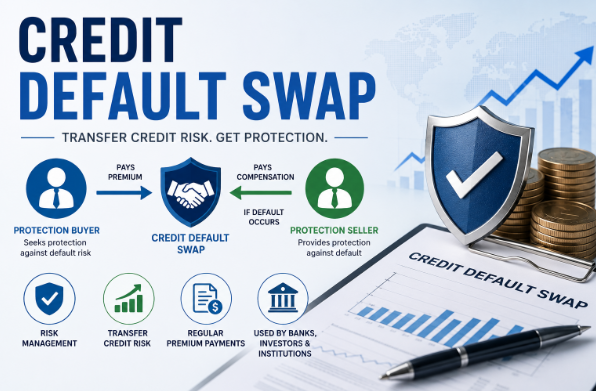
A credit default swap (CDS) is a financial contract that helps protect investors against the risk of a borrower failing to repay a debt. It is a type of derivative instrument in which one party transfers the credit risk of a loan, bond, or other debt obligation to another party.
In simple terms, it functions similarly to insurance on a debt instrument. The buyer of the contract pays periodic fees to the seller, and in return, the seller agrees to compensate the buyer if the borrower defaults on the debt.
This arrangement allows lenders and investors to reduce potential losses arising from credit-related events.
How Does a Credit Default Swap Work?
A CDS transaction generally involves three parties:
- The Borrower (Reference Entity) – The company, government, or institution that has issued the debt.
- The Protection Buyer – The investor or lender seeking protection against default risk.
- The Protection Seller – The party that assumes the risk in exchange for regular premium payments.
Example
Suppose an investor owns corporate bonds issued by a company. Although the bonds offer attractive returns, the investor is concerned about the possibility of the company defaulting.
To reduce this risk, the investor purchases a CDS contract from a financial institution.
- The investor pays a periodic premium.
- The financial institution agrees to compensate the investor if the company fails to meet its debt obligations.
- If no default occurs during the contract period, the seller keeps the premium payments.
This structure enables investors to manage risk without selling their underlying investments.
Key Components of a Credit Default Swap
Several elements determine how these contracts operate.
Reference Obligation
The debt instrument being protected, such as a corporate bond or loan, is known as the reference obligation.
Premium Payments
The protection buyer pays regular fees, often referred to as the CDS spread. These payments continue until the contract expires or a credit event occurs.
Credit Event
A credit event triggers compensation under the agreement. Common examples include:
- Bankruptcy
- Failure to make payments
- Debt restructuring
- Repudiation of debt obligations
Settlement Method
Once a credit event occurs, settlement can take place in two ways:
- Physical Settlement: The buyer delivers the defaulted debt instrument to the seller and receives its face value.
- Cash Settlement: The seller pays the difference between the debt’s face value and its market value after default.
Why Are Credit Default Swaps Used?
Financial institutions and investors use CDS contracts for various reasons.
Risk Management
The primary purpose is to hedge against credit risk. Banks and bondholders can protect themselves from losses if borrowers fail to repay their obligations.
Portfolio Diversification
Investors can manage exposure to different sectors or issuers without directly buying or selling underlying assets.
Market Signals
CDS spreads often reflect market perceptions of a borrower’s creditworthiness. Rising spreads may indicate increasing concerns about default risk.
Speculation
Some market participants use these instruments to speculate on changes in credit quality without owning the underlying debt.
Benefits of Credit Default Swaps
Enhanced Risk Protection
One of the biggest advantages is the ability to transfer credit risk to another party while retaining ownership of the underlying asset.
Improved Liquidity
CDS markets can provide additional liquidity by allowing investors to manage risk more efficiently.
Flexibility
These contracts can be customized based on maturity, issuer, and specific risk preferences.
Capital Efficiency
Financial institutions may use CDS contracts to optimize capital requirements and manage regulatory obligations.
Risks Associated With Credit Default Swaps
While CDS contracts offer several benefits, they also involve significant risks.
Counterparty Risk
If the protection seller becomes financially unstable, they may be unable to fulfill their obligations when a credit event occurs.
Market Volatility
Changes in economic conditions can cause CDS prices to fluctuate significantly.
Complexity
The structure and valuation of these instruments can be difficult for inexperienced investors to understand.
Systemic Risk
The global financial crisis of 2008 highlighted how excessive exposure to CDS contracts could contribute to broader financial instability.
Role of Credit Default Swaps in the Financial Crisis
The 2008 financial crisis brought CDS contracts into the spotlight. Many financial institutions had significant exposure to mortgage-backed securities and related derivatives.
When mortgage defaults increased, the value of these securities declined sharply. Several institutions that had sold large amounts of protection struggled to meet their obligations, creating widespread market disruptions.
This experience led regulators worldwide to introduce stricter oversight and reporting requirements for derivative markets.
Credit Risk and Personal Credit Scores
While a credit default swap primarily relates to institutional debt markets, the underlying concept of credit risk is also relevant to individual borrowers.
For example, lenders evaluate personal creditworthiness using credit scores before approving loans or credit cards. Many consumers frequently ask when cibil score is updated because changes in repayment behavior can influence borrowing opportunities.
Typically, lenders report credit information to credit bureaus periodically, and updates may take several weeks to appear in a credit report. Maintaining timely repayments and responsible credit usage remains essential for building a strong credit profile.
Although personal credit scores and CDS contracts operate in different areas of finance, both reflect the importance of assessing and managing credit risk.
How Investors Evaluate CDS Markets
Investors often monitor CDS spreads to gain insights into market sentiment.
Factors that influence spreads include:
- Economic conditions
- Interest rate movements
- Corporate earnings
- Government policies
- Industry-specific developments
Higher spreads generally indicate higher perceived default risk, while lower spreads suggest stronger confidence in the borrower’s ability to repay debt.
The Future of Credit Default Swaps
The CDS market continues to evolve as financial regulations and risk management practices develop. Increased transparency, centralized clearing mechanisms, and improved reporting standards have strengthened market stability.
As global financial markets become more interconnected, these instruments are likely to remain important tools for managing credit exposure and supporting efficient capital allocation.
Conclusion
A credit default swap is a financial derivative designed to transfer credit risk from one party to another. By providing protection against borrower defaults, it helps investors, banks, and institutions manage risk more effectively. While these contracts offer valuable benefits such as risk mitigation, flexibility, and liquidity, they also carry risks related to complexity, market volatility, and counterparty exposure.
Understanding how CDS contracts function provides valuable insight into modern financial markets and the broader concept of credit risk. Whether evaluating institutional investments or wondering when cibil score is updated for personal borrowing purposes, recognizing the role of creditworthiness remains essential for making informed financial decisions.