













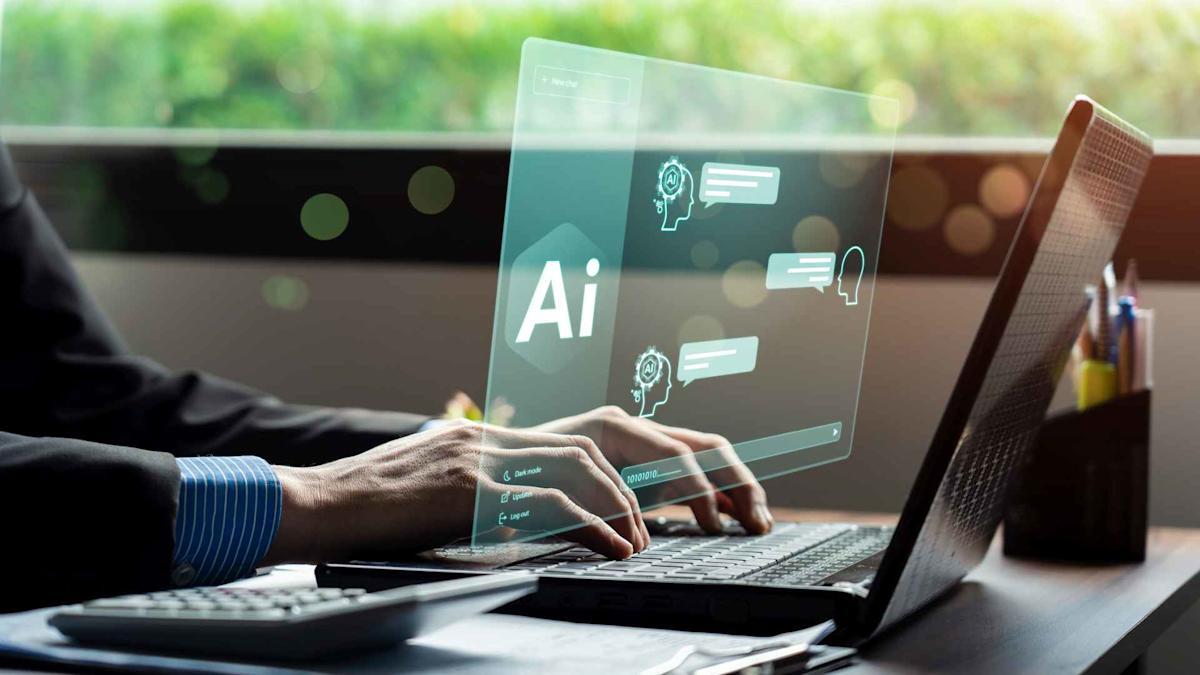
Data grows very fast in the modern digital world. Companies collect huge amounts of data every day from apps, websites, and devices.
A report shows that the world will create more than 200 zettabytes of data.
This huge amount of data needs quick processing and smart analysis. Data analysts work with tools like Python, SQL, and machine learning models. These tasks need strong computing power.
Many analysts now choose a smart AI laptop because it handles data faster and works more efficiently. It also supports AI acceleration and better processing units. As a result, analysts complete complex tasks with less waiting time.
Today, we’ll talk about the reasons data analysts prefer a smart AI laptop for data processing.
1. Faster Data Processing with AI Acceleration
Data analysts handle large datasets. These datasets may include millions of rows. Processing such data requires strong computing power.
A smart AI laptop includes AI acceleration hardware that improves processing speed. It helps analysts run algorithms faster. It also supports tasks such as data transformation, feature engineering, and predictive modeling.
How AI chips improve data workflows
Modern AI laptops include neural processing units. These chips process AI workloads more efficiently than standard CPUs.
This provides several benefits
- Faster execution of machine learning models.
- Quick data cleaning operations.
- Smooth handling of large datasets.
- Improved performance during statistical analysis.
Because of these advantages, analysts complete projects faster. They also spend less time waiting for data tools to load.
2. High-Performance CPUs for Complex Analytics
Data analysis often involves heavy computation. Analysts run complex algorithms and statistical models.
An AI laptop usually includes high-performance processors. These processors handle multithreaded workloads. They also support programming tools used in analytics. Popular analytics tools include platforms developed by the Python Software Foundation and Oracle Corporation.
Why multi-core processors matter
Data processing tasks often run in parallel. Multi-core CPUs divide tasks into smaller operations. Strong processors reduce delays. They also improve efficiency during heavy workloads.
This allows analysts to
- Process big datasets quickly.
- Run multiple scripts at the same time.
- Perform advanced statistical modeling.
- Execute machine learning algorithms smoothly.
3. Powerful RAM for Handling Large Datasets
Memory plays a key role in analytics work. Large datasets require a large memory capacity. A smart AI laptop often includes high RAM configurations. Many devices offer 16 GB or 32 GB RAM. Some high-end systems provide even more memory.
Why memory improves analytics performance
Data analytics tools load datasets into memory during processing. If the system lacks RAM, then operations slow down.
High memory capacity allows analysts to
- Load large datasets instantly.
- Run visualization tools smoothly.
- Perform real-time analysis.
- Execute multiple analytics programs.
4. GPU Power for Machine Learning Tasks
Machine learning is now a significant component of data analytics. Analysts train models to predict trends and spot patterns.
An AI laptop often includes dedicated GPUs. Graphics processing units perform parallel computation. This feature enhances the performance of machine learning. Companies such as NVIDIA produce GPUs that are compatible with AI frameworks and deep learning tasks.
How GPUs accelerate model training
Machine learning models process huge datasets during training. GPUs divide these workloads across thousands of small cores. Because of GPU acceleration, analysts finish model training in less time.
This helps analysts
- Train models faster.
- Run neural networks efficiently.
- Perform deep learning experiments.
- Process visual data and images.
5. Better Support for AI and Data Science Tools
There are numerous software tools that data analysts use. Such tools are machine learning systems and data visualization systems. A smart AI laptop is integrated with hardware and software to support these tools.
Compatibility with modern analytics platforms
Many analytics tools require strong computing resources. AI laptops provide the environment needed for smooth performance. Such tools analyze information and create insights. The AI laptops make sure that such platforms are operating without lag in the system. Due to this, analysts are more concerned with insights and not system constraints.
Common tools used by analysts include
- TensorFlow
- PyTorch
- Apache Spark
- Power BI
6. Faster Data Visualization and Dashboard Creation
Data analysis does not end with processing. Analysts also present results through dashboards and visual reports. Visualization tools generate graphs, charts, and dashboards. These tasks require strong graphics and processing capability. A smart AI laptop improves visualization speed and performance.
Why visualization performance matters
Quick visualization enables analysts to investigate data in a short period of time. It also helps them to identify patterns and trends at a quicker rate. Smooth execution of visualization improves analysts’ ability to communicate findings.
Key benefits include
- Quick dashboard generation.
- Smooth rendering of complex charts.
- Faster interaction with large datasets.
- Better presentation of analytics insights.
Conclusion
The contemporary digital economy is still developing data analytics. Data is used by organizations to make business decisions and enhance strategy. This is a rising demand that makes data analysts work harder. They run machine learning programs, manage massive amounts of data, and build predictive models. These heavy tasks are usually a challenge for traditional laptops.
An intelligent AI laptop can address this issue by providing high-performance processors, high-end GPUs, high memory, and AI acceleration. These characteristics help analysts to work with data more quickly and operate complicated analytics applications without difficulties.
Consequently, they do not waste much time waiting and spend more time finding insights. The device is also compatible with the current data science frameworks and visualization platforms.