













Space rarely disappears all at once. It erodes. A chair is pushed closer to the wall. Storage creeps into walkways. Corners become unusable, then forgotten. People adapt gradually, convincing themselves that the home is simply full. The idea that something fundamental is wrong does not surface until there is nowhere left to adjust.
This is the point at which most space-saving conversations begin. Not during design, not during planning, but after compromise has become routine. Homeowners start searching for answers that do not involve knocking down walls or moving house. They look for changes that reclaim function without increasing square footage.
What often surprises them is how much space was being lost to behaviour rather than objects. The problem is not always too much furniture or insufficient storage. It is how rooms are allowed to open, close, and connect.
Doors play an outsized role in this late discovery. They are accepted early and questioned late. A door seems harmless when a room is empty. Once the room fills with real life, that same door starts taking sides. It blocks. It interrupts. It forces decisions that feel increasingly limiting.
This becomes most obvious in rooms that have evolved over time. A spare bedroom becomes a workspace. A dining area absorbs storage. A hallway picks up shelving. Each new use tightens the layout until movement itself feels constrained. The door, unchanged since the beginning, quietly becomes the obstacle no one planned for.
At this stage, people often try surface solutions. Slimmer furniture. Custom cabinetry. Multi-use pieces. These help, but they rarely address the underlying restriction. The door still demands clearance. The wall still cannot be trusted. The room still works around an invisible rule.
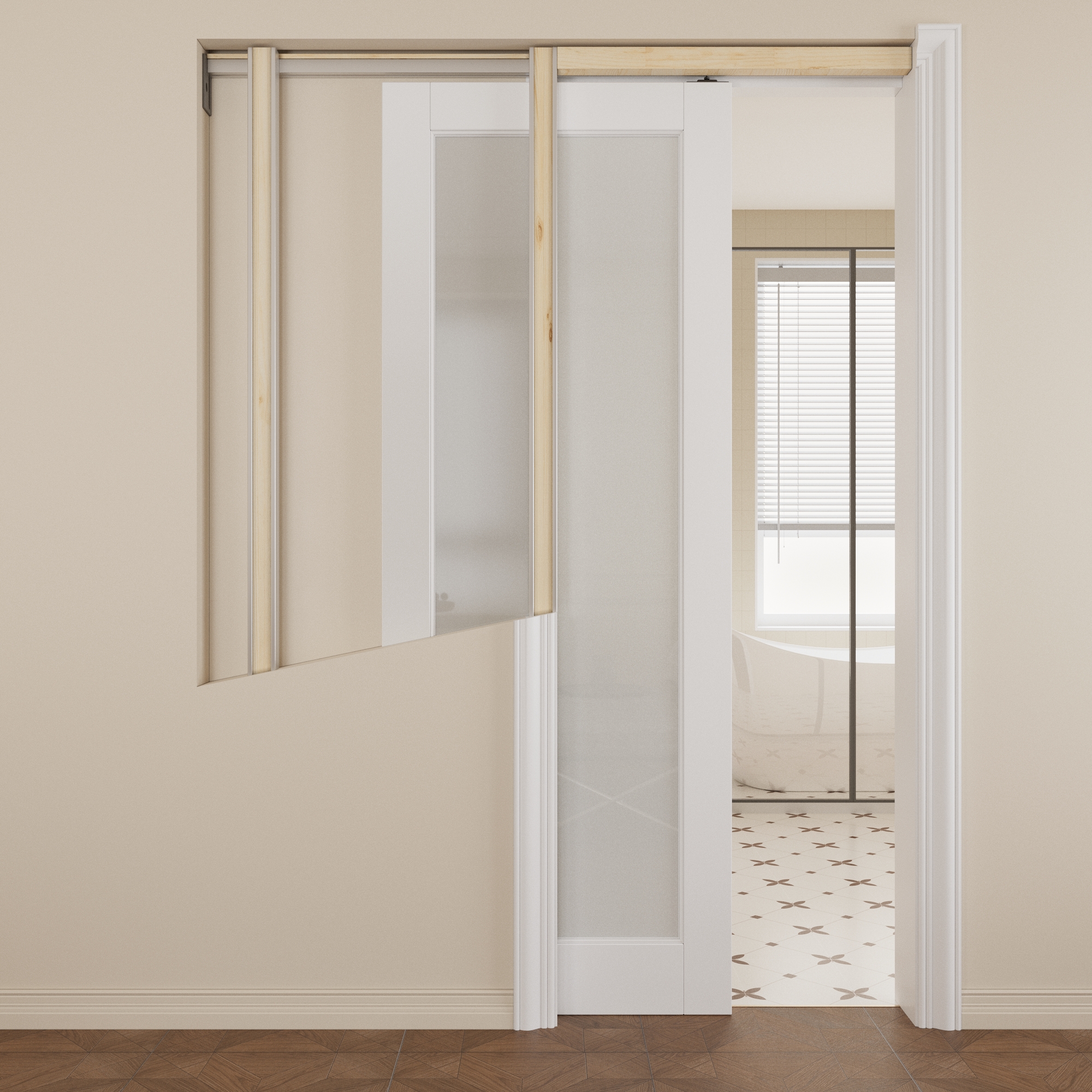
This is usually when sliding pocket doors enter the conversation. Not as a design trend, but as a last lever that has not yet been pulled. The appeal is not novelty. It is absence. The idea that something can simply stop occupying the room.
Once the swing is removed, the space often reveals capacity that felt impossible before. A wall becomes usable. Circulation straightens. Furniture can finally sit where it makes sense instead of where it is allowed. The change can feel disproportionate to the intervention.
What makes this solution feel like a discovery rather than a choice is timing. People rarely start with it. They arrive at it after exhausting more obvious options. In hindsight, it often feels like the first thing that should have been questioned.
There is also an emotional layer. Running out of space creates stress. Rooms feel crowded not because they are small, but because they are inflexible. When a single change restores flexibility, the relief is immediate. The home stops pushing back.
Importantly, this is not about minimalism or owning less. Many households need the things they have. What they lack is space that adapts. A door that disappears allows a room to expand temporarily without changing its contents.
What people notice most after the change is not the door itself. It is how often they stop thinking about it. Movement feels easier. Rooms feel calmer. The layout feels intentional rather than negotiated.
In many homes, the decision to use sliding pocket doors happens after space has already been stretched thin. That timing makes the impact feel dramatic, even though the change is modest.
The lesson is not that this door type is always the answer. It is that doors should not be invisible in planning. They shape how space is lived in, not just how rooms connect.
When homeowners finally question the door after running out of space, they often realise the home was never truly full. It was simply giving too much away.
By the time sliding pocket doors appear on the radar, they are no longer an aesthetic choice. They are a recovery tool. A way to reclaim function without asking the house to become something it cannot be.